hansdegoede: me (Default)
Good news the just released 6.17 kernel has support for the IPU7 CSI2 receiver and the missing USBIO drivers have recently landed in linux-next. I have backported the USBIO drivers + a few other camera fixes to the Fedora 6.17 kernel.

I've also prepared an updated libcamera-0.5.2 Fedora package with support for IPU7 (Lunar Lake) CSI2 receivers as well as backporting a set of upstream SwStats and AGC fixes, fixing various crashes as well as the bad flicker MIPI camera users have been hitting with libcamera 0.5.2.

Together these 2 updates should make Fedora 43's FOSS MIPI camera support work on most Meteor Lake, Lunar Lake and Arrow Lake laptops!

If you want to give this a try, install / upgrade to Fedora 43 beta and install all updates. If you've installed rpmfusion's binary IPU6 stack please run:

sudo dnf remove akmod-intel-ipu6 'kmod-intel-ipu6*'

to remove it as it may interfere with the FOSS stack and finally reboot. Please first try with qcam:

sudo dnf install libcamera-qcam
qcam

which only tests libcamera and after that give apps which use the camera through pipewire a try like gnome's "Camera" app (snapshot) or video-conferencing in Firefox.

Note snapshot on Lunar Lake triggers a bug in the LNL Vulkan code, to avoid this start snapshot from a terminal with:

GSK_RENDERER=gl snapshot

If you have a MIPI camera which still does not work please file a bug following these instructions and drop me an email with the bugzilla link at hansg@kernel.org.
hansdegoede: me (Default)
After 17 years I feel that it is time to change things up a bit and for a new challenge. I'm leaving Red Hat and my last day at Red Hat will be October 31st.

I would like to thank Red Hat for the opportunity to work on many interesting open-source projects during my time at Red Hat and for all the things I've learned while at Red Hat.

I want to use this opportunity to thank everyone I've worked with, both my great Red Hat colleagues, as well as everyone from the community for all the good times during the last 17 years.

I've a pretty good idea of what will come next, but this is not set in stone yet. I definitely will continue to work on open-source and on Linux hw-enablement.
hansdegoede: me (Default)
Patch review is an important and useful part of the kernel development process, but it also a time-consuming part. To see if I could save some human reviewer time I've been pushing kernel patch-series to a branch on github, creating a pull-request for the branch and then assigning it to Copilot for review. The idea being that In would fix any issues Co-pilot catches before posting the series upstream saving a human reviewer from having to catch the issues.

I've done this for 5 patch-series: one, two, three, four, five, totalling 53 patches in total. click the number to see the pull-request and Copilot's reviews.

Unfortunately the results are not great on 53 patches Co-pilot had 4 low-confidence comments which were not useful and 3 normal comments. 2 of the no comments were on the power-supply fwnode series one was about spelling degrees Celcius as degrees Celsius instead which is the single valid remark. The other remark was about re-assigning a variable without freeing it first, but Copilot missed that the re-assignment was to another variable since this happened in a different scope. The third normal comment (here) was about as useless as they can come.

To be fair these were all patch-series written by me and then already self-reviewed and deemed ready for upstream posting before I asked Copilot to review them.

As another experiment I did one final pull-request with a couple of WIP patches to add USBIO support from Intel. Copilot generated 3 normal comments here all 3 of which are valid and one of them catches a real bug. Still given the WIP state of this case and the fact that my own review has found a whole lot more then just this, including the need for a bunch if refactoring, the results of this Copilot review are also disappointing IMHO.

Co-pilot also automatically generates summaries of the changes in the pull-requests, at a first look these look useful for e.g. a cover-letter for a patch-set but they are often full with half-truths so at a minimum these need some very careful editing / correcting before they can be used.

My personal conclusion is that running patch-sets through Copilot before posting them on the list is not worth the effort.
hansdegoede: me (Default)
I'm happy to share that 3 major IPU6 camera related kernel changes from linux-next have been backported to Fedora and have been available for about a week now the Fedora kernel-6.14.6-300.fc42 (or later) package:

  1. Support for the OV02C10 camera sensor, this should e.g. enable the camera to work out of the box on all Dell XPS 9x40 models.
  2. Support for the OV02E10 camera sensor, this should e.g. enable the camera to work out of the box on Dell Precision 5690 laptops. When combined with item 3. below and the USBIO drivers from rpmfusion this should also e.g. enable the camera on other laptop models like e.g. the Dell Latitude 7450.
  3. Support for the special handshake GPIO used to turn on the sensor and allow sensor i2c-access on various new laptop models using the Lattice MIPI aggregator FPGA / USBIO chip.

If you want to give this a test using the libcamera-softwareISP FOSS stack, run the following commands:

sudo rm -f /etc/modprobe.d/ipu6-driver-select.conf
sudo dnf update 'kernel*'
sudo dnf install libcamera-qcam
reboot
qcam

Note the colors being washed out and/or the image possibly being a bit over or under exposed is expected behavior ATM, this is due to the software ISP needing more work to improve the image quality. If your camera still does not work after these changes and you've not filed a bug for this camera already please file a bug following these instructions.

See my previous blogpost on how to also test Intel's proprietary stack from rpmfusion if you also have that installed.
hansdegoede: me (Default)
Since the set of rpmfusion intel-ipu6-kmodipu6-camera-* package updates from last February the FOSS libcamera-softwareISP and Intel's proprietary stack using the Intel hardware ISP can now co-exist on Fedora systems, sharing the mainline IPU6-CSI2 receiver driver.

Because of this it is no longer necessary to blacklist the kernel-modules from the other stack. Unfortunately when the rpmfusion packages first generated "/etc/modprobe.d/ipu6-driver-select.conf" for blacklisting this file was not marked as "%ghost" in the specfile and now with the February ipu6-camera-hal the file has been removed from the package. This means that if you've jumped from an old ipu6-camera-hal where the file was not marked as "%ghost directly to the latest you may still have the modprobe.d conf file around causing issues. To fix this run:

sudo rm -f /etc/modprobe.d/ipu6-driver-select.conf

and then reboot. I'll also add this as post-install script to the ipu6-camera-hal packages, to fix systems being broken because of this.

If you want the rpmfusion packages because your system needs the USBIO drivers, but you do not want the proprietary stack, you can run the following command to disable the proprietary stack:

sudo ipu6-driver-select foss

Or if you have disabled the prorietary stack in the past and want to give it a try, run:

sudo ipu6-driver-select proprietary

To test switching between the 2 stacks in Firefox go to Mozilla's webrtc test page and click on the "Camera" button, you should now get a camera permisson dialog with 2 cameras: "Built in Front Camera" and "Intel MIPI Camera (V4L2)" the "Built in Front Camera" is the FOSS stack and the "Intel MIPI Camera (V4L2)" is the proprietary stack. Note the FOSS stack will show a strongly zoomed in (cropped) image, this is caused by the GUM test-page, in e.g. google-meet this will not be the case.

Unfortunately switching between the 2 cameras in jitsi does not work well. The jitsi camera selector tries to show a preview of both cameras at the same time and while one stack is streaming the other stack cannot access the camera. You should be able to switch by: 1. Selecting the camera you want 2. Closing the jitsi tab 3. wait a few seconds for the camera to stop streaming 4. open jitsi in a new tab.

Note I already mentioned most of this in my previous blog post but it was a bit buried there.
hansdegoede: me (Default)
I have been working on getting the camera on the ThinkPad X1 Carbon Gen 12 to work under Fedora.

This requires 3 things:

  1. Some ov08x40 sensor patches, these are available as downstream cherry-picks in Fedora kernels >= 6.12.13
  2. A small pipewire fix to avoid WirePlumber listing a bunch of bogus extra "ipu6" Video Sources, these fixes are available in Fedora's pipewire packages >= 1.2.7-4
  3. I2C and GPIO drivers for the new Lattice USB IO-expander, these drivers are not available in the upstream / mainline kernel yet

I have also rebased the out of tree IPU6 ISP and proprietary userspace stack in rpmfusion and I have integrated the USBIO drivers into the intel-ipu6-kmod package. So for now getting the cameras to work on the X1 Carbon Gen 12 requires installing the out of tree drivers through rpmfusion. Follow these instructions to enable rpmfusion, you need both the free and nonfree repos.

Then make sure you have a new enough kernel installed and install the rpmfusion akmod for the USBIO drivers:

sudo dnf update 'kernel*'
sudo dnf install akmod-intel-ipu6

The latest version of the out of tree IPU6 ISP driver can co-exist with the mainline / upstream IPU6 CSI receiver kernel driver. So both the libcamera software ISP FOSS stack and Intel's proprietary stack can co-exist now. If you do not want to use the proprietary stack you can disable it by running 'sudo ipu6-driver-select foss'.

After installing the kmod package reboot and then in Firefox go to Mozilla's webrtc test page and click on the "Camera" button, you should now get a camera permisson dialog with 2 cameras: "Built in Front Camera" and "Intel MIPI Camera (V4L2)" the "Built in Front Camera" is the FOSS stack and the "Intel MIPI Camera (V4L2)" is the proprietary stack. Note the FOSS stack will show a strongly zoomed in (cropped) image, this is caused by the GUM test-page, in e.g. google-meet this will not be the case.

I have also been making progress with some of the other open IPU6 issues:


hansdegoede: me (Default)
The initial IPU6 camera support landed in Fedora 41 only works on a limited set of laptops. The reason for this is that with MIPI cameras every different sensor and glue-chip like IO-expanders needs to be supported separately.

I have been working on making the camera work on more laptop models. After receiving and sending many emails and blog post comments about this I have started filing Fedora bugzilla issues on a per sensor and/or laptop-model basis to be able to properly keep track of all the work.

Currently the following issues are being either actively being worked on, or are being tracked to be fixed in the future.

Issues which have fixes pending (review) upstream:


Open issues with various states of progress:

See all the individual bugs for more details. I plan to post semi-regular status updates on this on my blog.

This above list of issues can also be found on my Fedora 42 change proposal tracking this and I intent to keep an updated complete list of all x86 MIPI camera issues (including closed ones) there.

hansdegoede: me (Default)
Unfortunately an incomplete backport of IPU6 DMA handling changes has landed in kernel 6.11.11.

This not only causes IPU6 cameras to not work, this causes the kernel to (often?) crash on boot on systems where the IPU6 is in use and thus enabled by the BIOS.

Kernels 6.12.2 - 6.12.4 are also affected by this. A fix for this is pending for the upcoming 6.12.5 release.

6.11.11 is the last stable release in the 6.11.y series, so there will be no new stable 6.11.y release with a fix.

As a workaround users affected by this can stay with 6.11.10 or 6.12.1 until 6.12.5 is available in your distributions updates(-testing) repository.

hansdegoede: me (Default)
I'm happy to announce that the last tweaks have landed and that the fully FOSS libcamera software ISP based IPU6 camera support in Fedora 41 now has no known bugs left. See the Changes page for testing instructions.

Supported hardware

Unlike USB UVC cameras where all cameras work with a single kernel driver, MIPI cameras like the Intel IPU6 cameras require multiple drivers. The IPU6 input-system CSI receiver driver is common to all laptops with an IPU6 camera, but different laptops use different camera sensors and each sensor needs its own driver and then there are glue ICs like the LJCA USB IO-expander and the iVSC (Intel Visual Sensing Controller) and there also is the ipu-bridge code which translates Windows oriented ACPI tables with sensor info into the fwnodes which the Linux drivers expect.

This means that even though IPU6 support has landed in Fedora 41 not all laptops with an IPU6 camera will work. Currently the IPU6 integrated in the following CPU models works if the sensor + glue hw/sw is also supported:

  • Tiger Lake
  • Alder Lake
  • Raptor Lake

Jasper Lake and Meteor Lake also have an IPU6 but there is some more integration work necessary to get things to work there. Getting Meteor Lake IPU6 cameras to work is high on my TODO list.

The mainline kernel IPU6 CSI receiver + libcamera software ISP has been successfully tested on the following models:

  • Various Lenovo ThinkPad models with ov2740 (INT3474) sensor (1)
  • Various Dell models with ov01a10 (OVTI01A0) sensor
  • Dell XPS 13 PLus with ov13b10 (OVTIDB10/OVTI13B1)
  • Some HP laptops with hi556 sensor (INT3537)

To see which sensor your laptop has run: "ls /sys/bus/i2c/devices" this will show e.g. "i2c-INT3474:00" if you have an ov2740, with INT3474 being the ACPI Hardware ID (HID) for the sensor. See here for a list of currently known HID to sensor mappings. Note not all of these have upstream drivers yet. In that cases chances are that there might be a sensor driver for your sensor here.

We could really use help with people submitting drivers from there upstream. So if you have a laptop with a sensor which is not in the mainline but is available there, you know a bit of C-programming and you are willing to help, then please drop me an email so that we can work together to get the driver upstream.

1) on some ThinkPads the ov2740 sensor fails to start streaming most of the time. I plan to look into this next week and hopefully I can come up with a fix.

MIPI camera Integration work done for Fedora 41

After landing the kernel IPU6 CSI receiver and libcamera software ISP support upstream early in the Fedora 41 cycle, there still was a lot of work to do with regards to integrating this into the rest of the stack so that the cameras can actually be used outside of the qcam test app.

The whole stack looks like this "kernel → libcamera → pipewire | pipewire-camera-consuming-app". Where the 2 currently supported pipewire-camera consuming apps are Firefox and GNOME Snapshot.

Once this was all up and running testing found quite a few bugs which have all been fixed now:

  • Firefox showing 13 different cameras in its camera selection pulldown for a single IPU6 camera (fix).
  • Installing pipewire-plugin-libcamera leads to UVC cameras being powered on all the time causing significant battery drain (bug, bug, discussion, fix).
  • Pipewire does not always recognizes cameras on login (bug, bug, bug, fix).
  • Pipewire fails to show cameras with relative controls (fix).
  • spa_libcamera_buffer_recycle sometimes fails, causing stream to freeze on first frame (bug, fix)
  • Firefox chooses bad default resolution of 640x480. I worked with Jan Grulich to get this fixed and this is fixed as of firefox-130.0.1-3.fc41. Thank you Jan!
  • Snapshot prefers 4:3 mode, e.g. 1280x1080 on 16:9 camera sensors capable of 1920x1080 (pending fix)
  • Added intel-vsc-firmware, pipewire-plugin-libcamera, libcamera-ipa to the Fedora 41 Workstation default package-set (pull, pull, pull)

hansdegoede: me (Default)
Recently there have been a number of reports (bug 2183743, bug 2276698, bug 2283839, bug 2312355) about the plymouth boot splash not showing properly on PCs using AMD GPUs.

The problem without plymouth and AMD GPUs is that the amdgpu driver is a really really big driver, which easily takes up to 10 seconds to load on older PCs. The delay caused by this may cause plymouth to timeout while waiting for the GPU to be initialized, causing it to fallback to the 3 dot text-mode boot splash.

There are 2 workaround for this depending on the PCs configuration:

1. With older AMD GPUs the radeon driver is actually used to drive the GPU but even though it is unused the amdgpu driver still loads slowing things down.

To check if this is the case for your PC start a terminal in a graphical login session and run: "lsmod | grep -E '^radeon|^amdgpu'" this will output something like this:

amdgpu 17829888 0
radeon 2371584 37

The second number after each is the usage count. As you can see in this example the amdgpu driver is not used. In this case you can disable the loading of the amdgpu driver by adding "modprobe.blacklist=amdgpu" to your kernel commandline:

sudo grubby --update-kernel=ALL --args="modprobe.blacklist=amdgpu"


2. If the amdgpu driver is actually used on your PC then plymouth not showing can be worked around by telling plymouth to use the simpledrm drm/kms device created from the EFI framebuffer early on boot, rather then waiting for the real GPU driver to load. Note this depends on your PC booting in EFI mode. To do this run:

sudo grubby --update-kernel=ALL --args="plymouth.use-simpledrm"


After using 1 of these workarounds plymouth should show normally again on boot (and booting should be a bit faster).
hansdegoede: me (Default)
As mentioned in my previous blog post, I have written a new patch series for 6.2 to try to avoid having multiple entries in /sys/class/backlight for a single panel again.

This new series might cause regressions on a different set of even older laptop models then the one affected by the 6.1 backlight work. So I'm again looking for people willing to run a few quick tests.

To see if your laptop is possibly affected by the 6.2 change please run:
  • ls /sys/class/backlight

if the output of this command contains both:
  1. A GPU native backlight device, with intel/nv/nvidia/amd/radeon/psb/oaktrail in the name; and
  2. A vendor backlight device, with either a model-series: eeepc, ideapad, thinkpad, etc; or a vendor-name: acer, asus, dell, toshiba, sony, etc. in the name

then 6.2 will cause a behavior change on your device, it will hide the vendor backlight device in preference of the native backlight device.

If your laptop shows only a native or only a vendor backlight device (possibly in combination with another type of backlight device such as acpi_video#), then your laptop will not be affected by the planned changes for 6.2.

Note that I expect only very old models to be affected, e.g. the Sony Vaio PCG-FRV3
from 2003 is known to be affected.

If your laptop has both native + vendor backlight devices, then please do 2 things:

  1. Please run the following commands:
    1. ls /sys/class/backlight > ls-backlight.txt
    2. sudo dmesg > dmesg.txt
    3. sudo dmidecode > dmidecode.txt
    4. sudo acpidump -o acpidump.txt
  2. Please test if the native backlight interface works, the example below assumes the native backlight is called "intel_backlight":
    1. cd /sys/class/backlight/intel_backlight
    2. cat max_brightness
    3. <the "cat max_brightness" will show the maximum brightness value supported>
    4. echo $max_brightness_value > brightness
    5. echo $half-of-max_brightness_value > brightness
 
Where if for example cat max_brightness returns 255 then $max_brightness_value
is 255 and $half-of-max_brightness_value is 127. And then check if the brightness of the backlight actually changes when you do this ?


After generating the 4 .txt files and running the native backlight tests, please send me an email about this at hdegoede@redhat.com with the results of the native backlight tests (panel brightness changes when echo-ing values to brightness or not?) and with the 4 generated .txt files attached.

If the native backlight interface works then things should keep working fine with 6.2 and typically you will get more fine-grained brightness control as an added bonus. Please send me an email with the test results even if the native backlight interface works.
hansdegoede: me (Default)
I have received quite a few test reports in response to my previous blog post. Many thanks to everyone who has run the tests and send me their results!

These tests show that as a result of the current 6.1 changes quite a few laptop models will end up with an empty "/sys/class/backlight", breaking users ability to control their laptop panel's brightness.

I have submitted a patch-set for 6.1 upstream to fix this.

More detailed summary/analysis of the received test reports:

  • Known Windows laptop models affected by this:
    • Acer Aspire 1640
    • HP Compaq nc6120
    • IBM ThinkPad X40
    • System76 Starling Star1
  • Known MacBook models affected by this:
    • Apple MacBook 2.1
    • Apple MacBook 4.1
    • Apple MacBook Pro 7.1
  • 30 unaffected models
  • The Dell Inspiron N4010 has acpi_video support and acpi_osi_is_win8() returns false, so acpi_video_get_backlight_type() returns acpi_video, but acpi_video fails to register a backlight device due to a _BCM eval error. This model already has a DMI quirk for this, so it is unaffected.
  • The following laptop models use vendor backlight control method, while also having a native backlight entry under /sys/class/backlight:
    • Asus EeePC 901 (native backlight confirmed to work better then vendor)
    • Dell Latitude D610 (native backlight confirmed to also work)
    • Sony Vaio PCG-FRV3 (native backlight control does not work, BIOS from 2003!)

The fixes for 6.1 restore the behavior where userspace can see multiple entries under "/sys/class/backlight" for a single panel and the kernel leaves figuring out which one actually works up to userspace. This is undesirable and having more then 1 backlight device for a single panel also blocks the new backlight userspace API work which I have planned.

This first round of testing has shown that native works well even on systems so old that they don't have acpi_video backlight control support.

So I have prepared a patch series to try again with 6.2 by making native be preferred over vendor, which should avoid the problems seen with the 6.1 changes before the fixes.
hansdegoede: me (Default)
I have landed a large(ish) refactor of the ACPI/x86 backlight detection code in the kernel for 6.1. I have been very careful to try and not break things but there is a special group of laptops where the ability to control the backlight brightness may disappear because of this.

The most likely laptops to be hit by this are laptops which are either pretty old and or which are weird in some other way (e.g. flashed with coreboot, did not ship with Windows as factory os, ...). Note Chromebooks are affected by this too, but that special category has already been fixed.

You can check if your laptop is affected by this by running "ls /sys/class/backlight" if this shows only 1 entry and that entry is named "intel_backlight", "nouveau_bl", "amdgpu_bl0" or "radeon_bl0" then your laptop might be affected.

Note this is quite normal on modern(ish) laptops, a second check is to boot with "acpi_backlight=video" added to the kernel commandline and then run "ls /sys/class/backlight" again, if you now additionally also have an "acpi_video0" entry then your laptop should work fine with 6.1, if you don't have an "acpi_video0" entry please first do "cat /proc/cmdline" and check that "acpi_backlight=video" is present there.

If you have e.g. only the "intel_backlight" entry and adding "acpi_backlight=video" does not cause an "acpi_video0" entry to appear then 6.1 will likely break backlight control!

If you have a laptop which is likely affected by this then please run the following commands:
  • ls /sys/class/backlight > ls-backlight.txt
  • sudo dmesg > dmesg.txt
  • sudo dmidecode > dmidecode.txt
  • sudo acpidump -o acpidump.txt
And send me an email about this at hdegoede@redhat.com with the 4 generated .txt files attached. If possible please also give an actual 6.1 kernel a try and see if that indeed breaks things. E.g. for Fedora you can find 6.1 kernel builds here and see here for some install instructions for these Fedora kernel builds.
hansdegoede: me (Default)
Starting with kernel 5.17 the kernel supports the builtin privacy screens built into the LCD panel of some new laptop models.

This means that the drm drivers will now return -EPROBE_DEFER from their probe() method on models with a builtin privacy screen when the privacy screen provider driver has not been loaded yet.

To avoid any regressions distors should modify their initrd generation tools to include privacy screen provider drivers in the initrd (at least on systems with a privacy screen), before 5.17 kernels start showing up in their repos.

If this change is not made, then users using a graphical bootsplash (plymouth) will get an extra boot-delay of up to 8 seconds (DeviceTimeout in plymouthd.defaults) before plymouth will show and when using disk-encryption where the LUKS password is requested from the initrd, the system will fallback to text-mode after these 8 seconds.

I've written a patch with the necessary changes for dracut, which might be useful as an example for how to deal with this in other initrd generators, see: https://github.com/dracutdevs/dracut/pull/1666

I've also filed bugs for tracking this for Fedora, openSUSE, Arch, Debian and Ubuntu.
hansdegoede: me (Default)
Recently I acquired an Acer Aspire Switch 10 E SW3-016, this device was the main reason for writing my blog post about the shim boot loop. The EFI firmware of this is bad in a number of ways:

  1. It considers its eMMC unbootable unless its ESP contains an EFI/Microsoft/Boot/bootmgfw.efi file.

  2. But it will actually boot EFI/Boot/bootx64.efi ! (wait what? yes really)

  3. It will only boot from an USB disk connected to its micro-USB connector, not from the USB-A connector on the keyboard-dock.

  4. You must first set a BIOS admin password before you can disable secure-boot (which is necessary to boot home-build kernels without doing your own signing)

  5. Last but not least it has one more nasty "feature", it detect if the OS being booted is Windows, Android or unknown and it updates the ACPI DSDT based in this!

Some more details on the OS detection mis feature. The ACPI "Device (SDHB) node for the MMC controller connected to the SDIO wifi module contains:

        Name (WHID, "80860F14")
        Name (AHID, "INT33BB")


Depending on what OS the BIOS thinks it is booting it renames one of these 2 to _HID. This is weird given that it will only boot if EFI/Microsoft/Boot/bootmgfw.efi exists, but it still does this. Worse it looks at the actual contents of EFI/Boot/bootx64.efi for this. It seems that that file must be signed, otherwise it goes in OS unknown mode and keeps the 2 above DSDT bits as is, so there is no _HID defined for the wifi's mmc controller and thus no wifi. I hit this issue when I replaced EFI/Boot/bootx64.efi with grubx64.efi to break the bootloop. grubx64.efi is not signed so the DSDT as Linux saw it contained the above AML code. Using the proper workaround for the bootloop from my previous blog post this bit of the DSDT morphes into:

        Name (_HID, "80860F14")
        Name (AHID, "INT33BB")


And the wifi works.

The Acer Aspire Switch 10 E SW3-016's firmware also triggers an actual bug / issue in Linux' ACPI implementation, causing the bluetooth to not work. This is discussed in much detail here. I have a patch series fixing this here.

And the older Acer Aspire Switch 10 SW5-012's and S1002's firmware has some similar issues:

  1. It considers its eMMC unbootable unless its ESP contains an EFI/Microsoft/Boot/bootmgfw.efi file

  2. These models will actually always boot the EFI/Microsoft/Boot/bootmgfw.efi file, so that is somewhat more sensible.

  3. On the SW5-012 you must first set a BIOS admin password before you can disable secure-boot.

  4. The SW5-012 is missing an ACPI device node for the PWM controller used for controlling the backlight brightness. I guess that the Windows i915 gfx driver just directly pokes the registers (which are in a whole other IP block), rather then relying on a separate PWM driver as Linux does. Unfortunately there is no way to fix this, other then using a DSDT overlay. I have a DSDT overlay for the V1.20 BIOS and only for the v1.20 BIOS available for this here.

Because of 1. and 2. you need to take the following steps to get Linux to boot on the Acer Aspire Switch 10 SW5-012 or the S1002:

  1. Rename the original bootmgfw.efi (so that you can chainload it in the multi-boot case)

  2. Replace bootmgfw.efi with shimia32.efi

  3. Copy EFI/fedora/grubia32.efi to EFI/Microsoft/Boot

This assumes that you have the files from a 32 bit Windows install in your ESP already.
hansdegoede: me (Default)
A while ago as a spin-off of my project to improve support for Logitech wireless keyboards and mice I have also done some work on improving support for (Gaming) keyboards with a builtin LCD panel.

Specifically if you have a Logitech MX5000, G15, G15 v2 or G510 and you want the LCD panel to show something somewhat useful then on Fedora 31 you can now install the lcdproc package and it will automatically recognize the keyboard and show "top" like information on it. No need to manually write an LCDd.conf or anything, this works fully plug and play:

sudo dnf install lcdproc
sudo udevadm trigger


If you have a MX5000 and you do not want the LCD panel to show "top" like info, you may still want to install the mx5000tools package, this will automatically send the system time to the keyboard, after which it will display the time.

Once the 5.5 kernel becomes available as an update for Fedora you will also be able to use the keys surrounding the LCD panel to control the lcdproc menu-s on the LCD panel. The 5.5 kernel will also export key backlight brightness control through the standardized /sys/class/leds API, so that you can control it from e.g. the GNOME control-center's power-settings and you get a nice OSD when toggling the brightnesslevel using the key on the keyboard.

The 5.5 kernel will also make the "G" keys send standard input-events (evdev events), once userspace support for the new key-codes these send has landed, this will allow e.g. binding them to actions in GNOME control-center's keyboard-settings. But only under Wayland as the new keycodes are > 255 and X11 does not support this.
hansdegoede: me (Default)
I got contacted by a user with a HP X2 10 p018wm 2-in-1 about the device waking up 10-60 seconds after suspend. I have access to a HP X2 10 p002nd myself which in essence is the same HW and I managed to reproduce the problem there. This is when the fun started:

1. There were a whole bunch of ACPI related errors in dmesg. It turns out that these affect almost all HP laptop models and we have a multiple bugs open for this. Debugging these pointed to the hp-wmi driver. I wrote 2 patches fixes 2 different kind of errors and submitted these upstream. Unfortunately this does not help with the suspend/resume issue, but it does fix all those errors people have been complaining about :)

2. I noticed some weird messages in dmesg with look like a PCI bus re-enumeration is started during suspend when suspending by closing the lid and then the re-enumeration continues after resume. This turns out to be triggered by this piece of buggy AML code which
is used for monitor hotplug notification on gfx state changes (the i915 driver ACPI opregion also tracks the lid state for some reason):

                Method (GNOT, 2, NotSerialized)
                {
                    ...
                    CEVT = Arg0
                    CSTS = 0x03
                    If (((CHPD == Zero) && (Arg1 == Zero)))
                    {
                        If (((OSYS > 0x07D0) || (OSYS < 0x07D6)))
                        {
                            Notify (PCI0, Arg1)
                        }
                        Else
                        {
                            Notify (GFX0, Arg1)
                        }
                    }
                    ...
                }

Notice how "If (((OSYS > 0x07D0) || (OSYS < 0x07D6)))" is always true, the condition is broken the "||" clearly should have been a "&&" this is causing the code to send a hotplug notify to the PCI root instead of to the gfx card, triggering a re-enumeration. Doing a grep for this on my personal DSDT collection shows that 55 of the 93 DSDTs in my collection have this issue!

Luckily this can be easily fixed by setting CHPD to 1 in the i915 driver, which is something which we should do anyways according to the
opregion documentation. So I wrote a patch doing this and submitted it upstream. Unfortunately this also does not help with the suspend/resume issue.

3. So the actual spurious wakeups are caused by HP using an external embedded controller (EC) on the "legacy-free" platform which they use for these laptops. Since these are not designed to use an external EC they lack the standard interface for this, so HP has hooked the EC up over I2C and using an ACPI GPIO event handler as EC interrupt.

These devices use suspend2idle (s2idle) instead of good old firmware handled S3, so the EC stays active during suspend. It does some housekeeping work which involves a round-trip through the AML code every minute. Normally EC wakeups are ignored durin s2idle by some special handling in the kernel, but this is only done for ECs using the standardized ACPI EC interface, not for this bolted on the
side model. I've started a discussion on maybe extending our ACPI event handling to deal with this special case.

For now as a workaround I ended up writing 2 more patches to allow blacklisting wakeup by ACPI GPIO event handlers on select models. This breaks wakeup by opening the LID, the user needs to wake the laptop with the powerbutton. But at least the laptop will stay suspended now.
hansdegoede: me (Default)
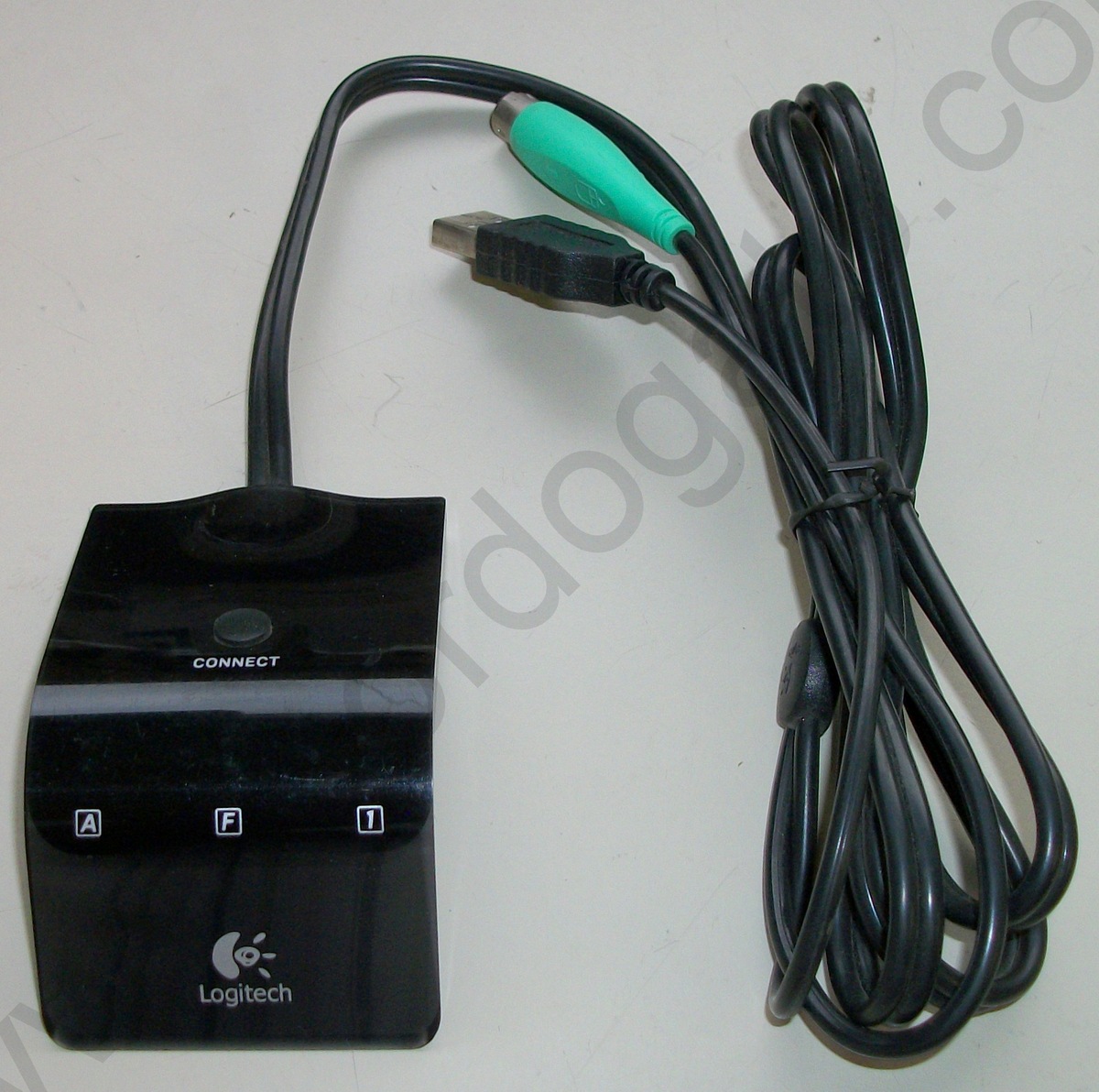
The just released 5.2-rc1 kernel includes improved support for Logitech wireless keyboards and mice. Until now we were relying on the generic HID keyboard and mouse emulation for 27 MHz and non-unifying 2.4 GHz wireless receivers.

Starting with the 5.2 kernel instead we actually look at the devices behind the receiver. This allows us to provide battery monitoring support and to have per device quirks, like device specific HID-code to evdev-code mappings where necessary. Until now device specific quirks where not possible because the receivers have a generic product-id which is the same independent of the device behind the receiver.

The per device key-mapping is especially important for 27MHz wireless devices, these use the same HID-code for Fn + F1 to Fn + F12 for all devices, but the markings on the keys differ per model. Sofar it was impossible for Linux to get the mapping for this right, but now that we have per device product-ids for the devices behind the receiver we can finally fix this. As is the case with other devices with vendor specific mappings, the actual mapping is done in userspace through hwdb.

If you have a 27 MHz device (often using this receiver, keyboard marked as canada 210 or canada 310 at the bottom). Please give 5.2 a try. Download the latest 60-keyboard.hwdb file and place it in /lib/udev/hwdb.d (replacing the existing file) and then run "sudo udevadm hwdb --update", before booting into the 5.2 kernel. Then run "sudo evemu-record" select your keyboard and try Fn + F1 to Fn + F12 and any other special keys. If any keys do not work, edit 60-keyboard.hwdb, search for Logitech and add an entry for your keyboard, see the existing Logitech entries. After editing you need to re-run "sudo udevadm hwdb --update", followed by "sudo udevadm trigger" for the changes to take effect. Once you have a working entry, submit a pull-req to systemd to get the changes upstream. If you need any help drop me an email.

We still have some old code for the generic HID emulation for 27 MHz receivers with a product-id of 046d:c50c, these should work fine with the new code, but we've been unable to test this. I would really like to move the 046d:c50c id over to the new code and remove all the old code. If you've a 27 MHz Logitech device, please run lsusb, if your device has a product-id of 046d:c50c and you are willing to test, please drop me an email.

Likewise I suspect that 2.4GHz receivers with a product-id of 046d:c531 should work fine with the new support for non-unifying 2.4 GHz receivers, if you have one of those also please drop me an email.
hansdegoede: me (Default)

Once upon a time a driver was written for the Lenovo Ideapad firmware interface for handling special keys and rfkill functionality. This driver was written on an Ideapad laptop with a slider on the side to turn wifi on/off, a so called hardware rfkill switch. Sometime later a Yoga model using the same firmware interface showed up, without a hardware rfkill switch. It turns out that in this case the firmware interface reports the non-present switch as always in the off position, causing NetworkManager to not even try to use the wifi effectively breaking wifi.

So I added a dmi blacklist for models without a hardware rfkill switch. The same firmware interface is still used on new Ideapad and Yoga models and since most modern laptops typically do not have such a switch this dmi blacklist has been growing and growing. Just in the 5.1 kernel alone 5 new models were added. Worse as mentioned not being on the list for a model without the hardware switch leads to non working wifi, pretty much leading to any new Ideapad model not working with Linux until added to the list.

To fix this I've submitted a patch upstream turning the huge blacklist into a whitelist. This whitelist is empty for now, meaning that we define all models as not having a rfkill switch. This does lead to a small regression on models which do actually have a hardware rfkill switch, before this commit they would correctly report the wifi being disabled by the hw switch and e.g. the GNOME3 UI would report "wifi disabled in hardware", where as now users will just get an empty list of available wifi networks when the switch is in the off position. But this is a small price to pay to make sure that as of yet unknown and new Ideapad models do not have non-working wifi because of this issue.

As said the whitelist for models which do actually have a hardware rfkill switch is currently empty, so I need your help to fill it. If you have an Ideapad or Yoga laptop with a wifi on/off slider switch on it. Please run "rfkill list" if this contains "ideapad_wlan" in the output then you are using the ideapad-laptop driver. In this case please check that the "Hard blocked" setting for the "ideapad_wlan" rfkill device properly shows no / yes based on the switch position. If this works your model should be added to the new whitelist. For this please run: "sudo dmidecode &> dmidecode.log" and send me an email at hdegoede@redhat.com with the dmidecode.log attached.

Note the patch to change the list to a whitelist has been included in the Fedora kernels starting with kernel 5.0.10-300, so if you have an
Ideapad or Yoga running Fedora and you do see "ideapad_wlan" in the "rfkill list" output, but the "Hard blocked" setting does not respond, try with a kernel older then 5.0.10-300, let me know if you need help with this.

hansdegoede: me (Default)
There have been questions about the Fedora 30 Flicker Free Boot Change in various places, here is a FAQ which hopefully answers most questions:

1) I get a black screen for a couple of seconds during boot?

1.1) If you have an AMD or Nvidia GPU driving your screen, then this is normal. The graphics drivers for AMD and Nvidia GPUs reset the hardware when loading, this will cause the display to temporarily go black. There is nothing which can be done about this.

1b) If you have a somewhat older Intel GPU (your CPU is pre Skylake) then the i915 driver's support to skip the mode-reset is disabled by default (for now) to fix this add "i915.fastboot=1" to your kernel commandline. For more info on modifying the kernel cmdline, see question 7.

1c) Do "ls /sys/firmware/efi/efivars" if you get a "No such file or directory" error then your system is booting in classic BIOS mode instead of UEFI mode, to fix this you need to re-install and boot the livecd/installer in UEFI mode when installing. Alternatively you can try to convert your existing install, note this is quite tricky, make backups first!

1d) Your system may be using the classic VGA BIOS during boot despite running in UEFI mode. Often you can select BIOS mode compatility in your BIOS settings aka the CSM setting. If you can select this on a per component level, set the VIDEO/VGA option to "UEFI only" or "UEFI first", alternatively you can try completely disabling the CSM mode. On some systems you can disable the classic VGA BIOS by disabling / unselecting the "Legacy Option ROMs" option.

2) The vendor-logo/firmware-splash looks squashed or has the wrong size?

Your system may be using the classic VGA BIOS during boot despite running in UEFI mode, see answer 1d.

3) I get a black background instead of the firmware splash while Fedora is booting?

Do "ls /sys/firmware/acpi/bgrt" if you get a "No such file or directory" error then try answers 1c and 1d . If you do have a /sys/firmware/acpi/bgrt directory, but you are still getting the Fedora logo + spinner on a black background instead of on top of the firmware-splash, please file a bug about this and drop me a mail with a link to the bug.

4) Getting rid of the vendor-logo/firmware-splash being shown while Fedora is booting?

If you don't want the firmware-splash to be used as background during boot, you can switch plymouth to the spinner theme, which is identical to the new bgrt theme, except that it does not use the firmware-splash as background, to do this execute the following command from a terminal: "sudo plymouth-set-default-theme -R spinner"

Note that the kernel will restore the vendor-logo early on at boot in case it got damaged by e.g. option ROM messages. If you are switching to the spinner theme you may also want to add "video=efifb:nobgrt" to your kernel commandline. See 7 below for how to edit the kernel commandline.

5) Keeping the firmware-splash as background while unlocking the disk?

If you prefer this, it is possible to keep the firmware-splash as background while the diskcrypt password is shown. To do this do the following:

  1. "sudo mkdir /usr/share/plymouth/themes/mybgrt"

  2. "sudo cp /usr/share/plymouth/themes/bgrt/bgrt.plymouth /usr/share/plymouth/themes/mybgrt/mybgrt.plymouth"

  3. edit /usr/share/plymouth/themes/mybgrt/mybgrt.plymouth, change DialogClearsFirmwareBackground=true to DialogClearsFirmwareBackground=false, change DialogVerticalAlignment=.382 to DialogVerticalAlignment=.6

  4. "sudo plymouth-set-default-theme -R mybgrt"

Note if you do this the disk-passphrase entry dialog may be partially drawn over the vendor-logo part of the firmware-splash, if this happens then try increasing DialogVerticalAlignment to e.g. 0.7 .

6) Get detailed boot progress instead of the boot-splash ?

To get detailed boot progress info press ESC during boot.

7) Always get detailed boot progress instead of the boot-splash ?

To always get detailed boot progress instead of the boot-splash, remove "rhgb" from your kernel commandline:

Edit /etc/default/grub and remove rhgb from GRUB_CMDLINE_LINUX and then if you are booting using UEFI (see 1c) run:
"grub2-mkconfig -o /etc/grub2-efi.cfg"
else (if you are booting using classic BIOS boot) run:
"grub2-mkconfig -o /etc/grub2.cfg".

Profile

hansdegoede: me (Default)
Hans de Goede

September 2025

S M T W T F S
 12 3456
78910111213
14151617181920
21222324252627
2829 30    

Syndicate

RSS Atom

Most Popular Tags

Style Credit

Expand Cut Tags

No cut tags
Page generated Dec. 28th, 2025 05:14 pm
Powered by Dreamwidth Studios